Industry Leaders in Test & Measurement Products
Let’s find the right products to help you test faster, improve reliability, and maximize your test data.
Cable Testing Solutions
-

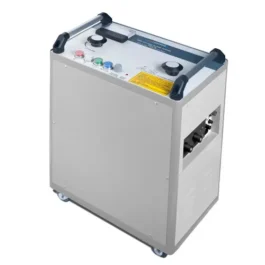
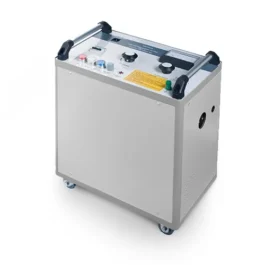
The High Voltage (HV) Surge Tester is a robust and dependable tool crafted to identify faults in underground power cables. It does this by utilizing the acoustic method alongside a compatible Surge Wave Receiver.
Beyond just pinpointing faults, the HV Surge Tester also enables the pre-location of cable fault distances when paired with a compatible pre-locator unit in Impulse Current (ICM) mode. For even more precise fault detection, it can be connected to an Arc Reflection Filter (ARM/SIM mode), which significantly boosts pre-location accuracy.
-
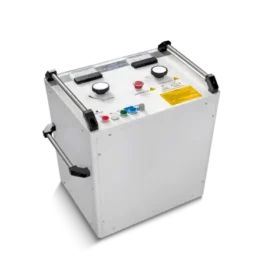
The SWT32 High Voltage Surge Tester is a powerful and effective tool designed to help locate faults in underground power cables using an acoustic method paired with a compatible Surge Wave Receiver.
This tester also offers fault pre-location when used with a compatible pre-locator unit in Impulse Current (ICM) mode. Plus, it can be paired with an Arc Reflection Filter (SIM/ARM mode) for precise and advanced fault distance measurements.
-
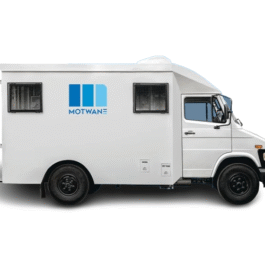
The Motwane Automated Van System (Metrix 1.0) is a cutting-edge mobile lab designed for locating and testing underground cable faults in power distribution networks. This all-in-one solution dramatically cuts down on fault detection time, prioritizes operator safety, and delivers precise pre-location and pinpointing of faults in low, medium, high, and extra-high voltage cables.
-
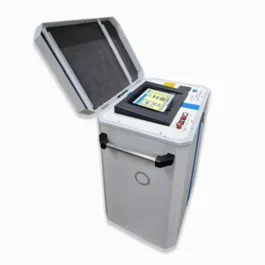
COMPAC 12 is a compact, rugged system designed for quick and accurate cable fault detection in power cables, ideal for utilities, industrial plants, and service providers. It integrates advanced diagnostic tools for fault pre-location and stabilization in one unit, offering up to 12kV voltage capability and 750J energy delivery with essential safety features like output cable interlock, emergency OFF, and automatic discharge.
Pre-location modes include TDR, ICM, and ARM. Additional functions include DC Hi-Pot testing for insulation integrity (up to 12kV, 20mA with overcurrent trip), sheath fault location and burn/proof testing (12kV DC, up to 50mA) to stabilize faults for faster pre-location. -
Power Cable Fault Locator is a portable, easy to use cable fault prelocation instrument. It uses the time domain reflection (TDR), multiple impulse method (MIM) and Impulse current method (ICM) on low, medium and high voltage cables. Its measuring ranges enable pre-location on cable lengths from 0 to 200km.
-
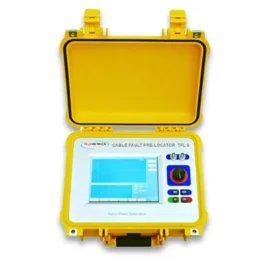
The Motwane TFL-5 Cable Fault Pre-Locator is a smart, user-friendly device that uses a microprocessor and a menu-driven interface to quickly and accurately find faults in underground metallic cables.
It operates on the pulse reflection principle, known as Time Domain Reflectometry (TDR), allowing it to pinpoint issues like open circuits, short circuits, cross faults, and earth faults in various types of cables, including power, telecom, signal, and plastic-insulated ones.
Designed to be compact, lightweight, and tough, the TFL-5 is perfect for fieldwork, helping technicians tackle cable faults efficiently while keeping downtime and labor to a minimum.
-
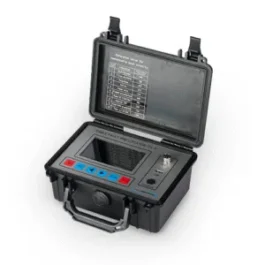
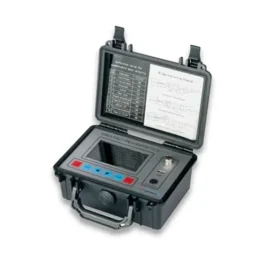
This handy microprocessor-based cable fault prelocator is a user-friendly, portable tool designed to quickly and accurately identify faults in telecommunication, signal, and pilot cables. It cleverly combines Time Domain Reflectometer (TDR / Pulse Reflection) and Intelligent Bridge Testing methods, making it super effective at pinpointing issues like open or broken circuits, short circuits, cross faults, earth faults, and insulation problems.
On top of that, it features IR testing capability, which lets it measure and show insulation resistance in Mega Ohms while in bridge mode. With its compact and sturdy design, plus an 8-hour battery life, it’s perfect for dependable use right on-site.
-
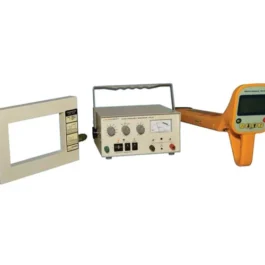
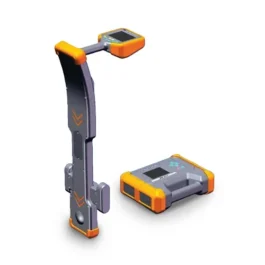
The Cable Route Tracer (CRT) is a vital tool for pinpointing faults in underground power and telecom cable networks. This sophisticated audio frequency system is built to handle a range of important tasks, such as tracing the routes of metallic cables, measuring their depth, tracking live loaded cables, and conducting ground surveys of underground utilities.
-
The Cable Route Tracer CRT 15DG is a must-have tool for pinpointing faults in underground power and telecom cable networks. This robust audio frequency system is versatile enough to handle various tasks, including tracing metallic cable routes, measuring depths, tracking live loaded cables, and conducting ground surveys of underground utilities.
-
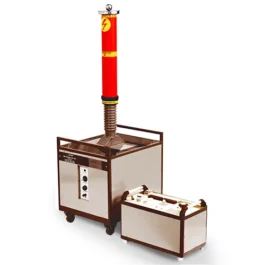
The HVG High Voltage Test Set, often referred to as a Dielectric Hi-Pot Tester, is a tough, precise, and incredibly dependable tool designed to check the dielectric strength of insulation in electrical equipment. This device is crucial for testing power cables, capacitors, transformers, motors, and various other electrical components, helping to ensure their long-lasting reliability and adherence to global safety standards.
The AC/DC Hi-Pot test, also known as the Dielectric Breakdown Test, plays a vital role in diagnosing insulation issues before they lead to serious failures. With more than 80% of faults in electrical and electronic systems stemming from weak or worn-out insulation—often due to dirt, grease, moisture, humidity, and thermal stress—Hi-Pot testing is essential for quality assurance and preventive maintenance.
-
The LV Surge Tester is a sturdy and dependable tool crafted to accurately identify underground power cable faults. It does this by using the acoustic method alongside a compatible Surge Wave Receiver.
-
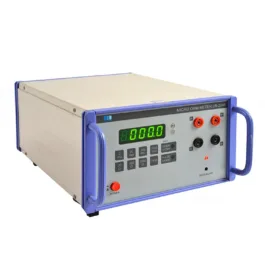
The Motwane LR-2045 is crafted to deliver incredibly precise measurements of very low resistances, making it a trustworthy option for electrical testing, maintenance, and diagnostics.
It can measure resistance values as low as 0.1 μΩ with remarkable precision.
It spans a wide range from 2 mΩ to 2 kΩ, offering a fine resolution of 0.1 μΩ.